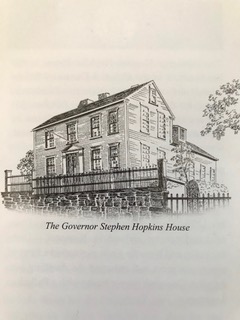
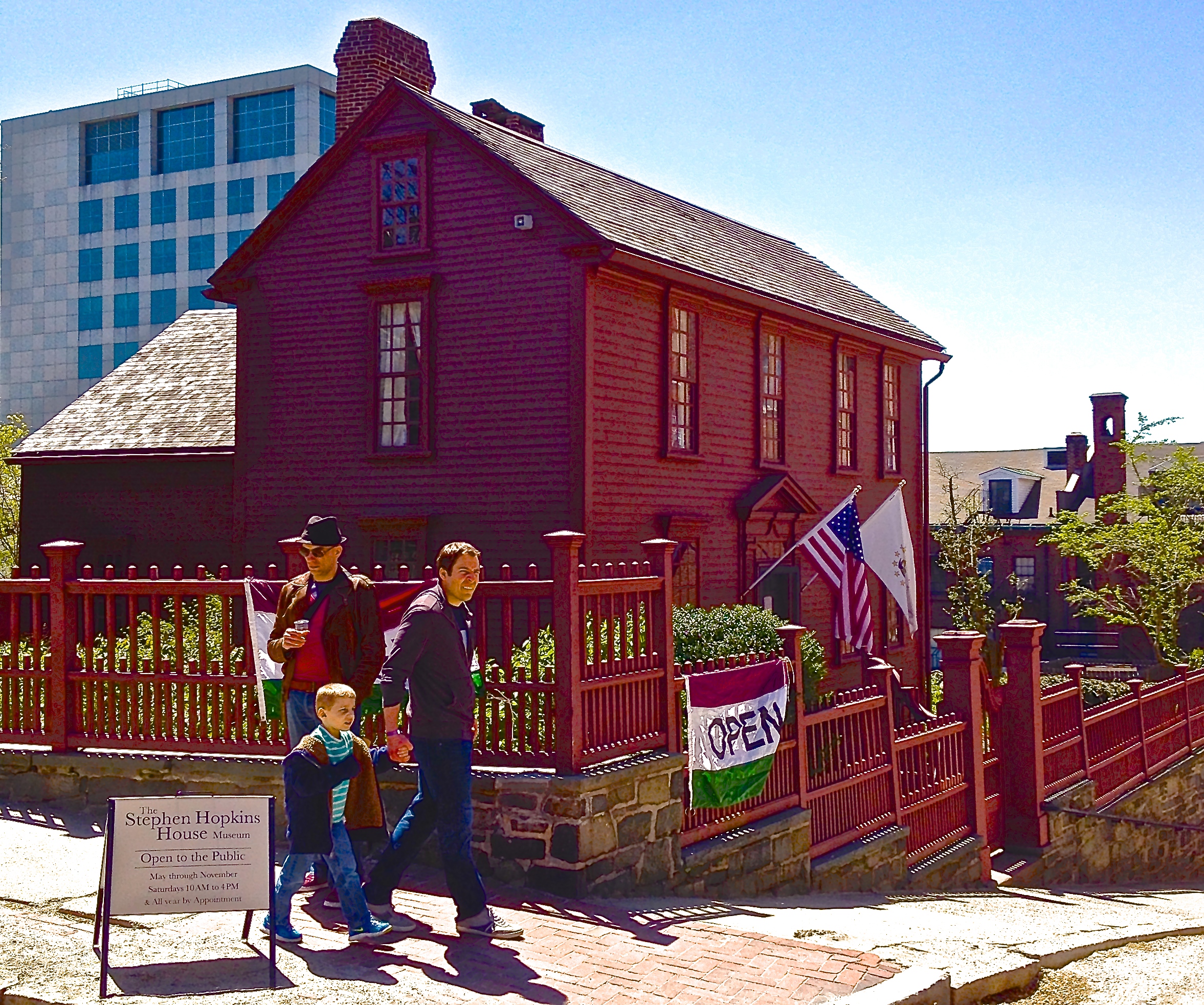
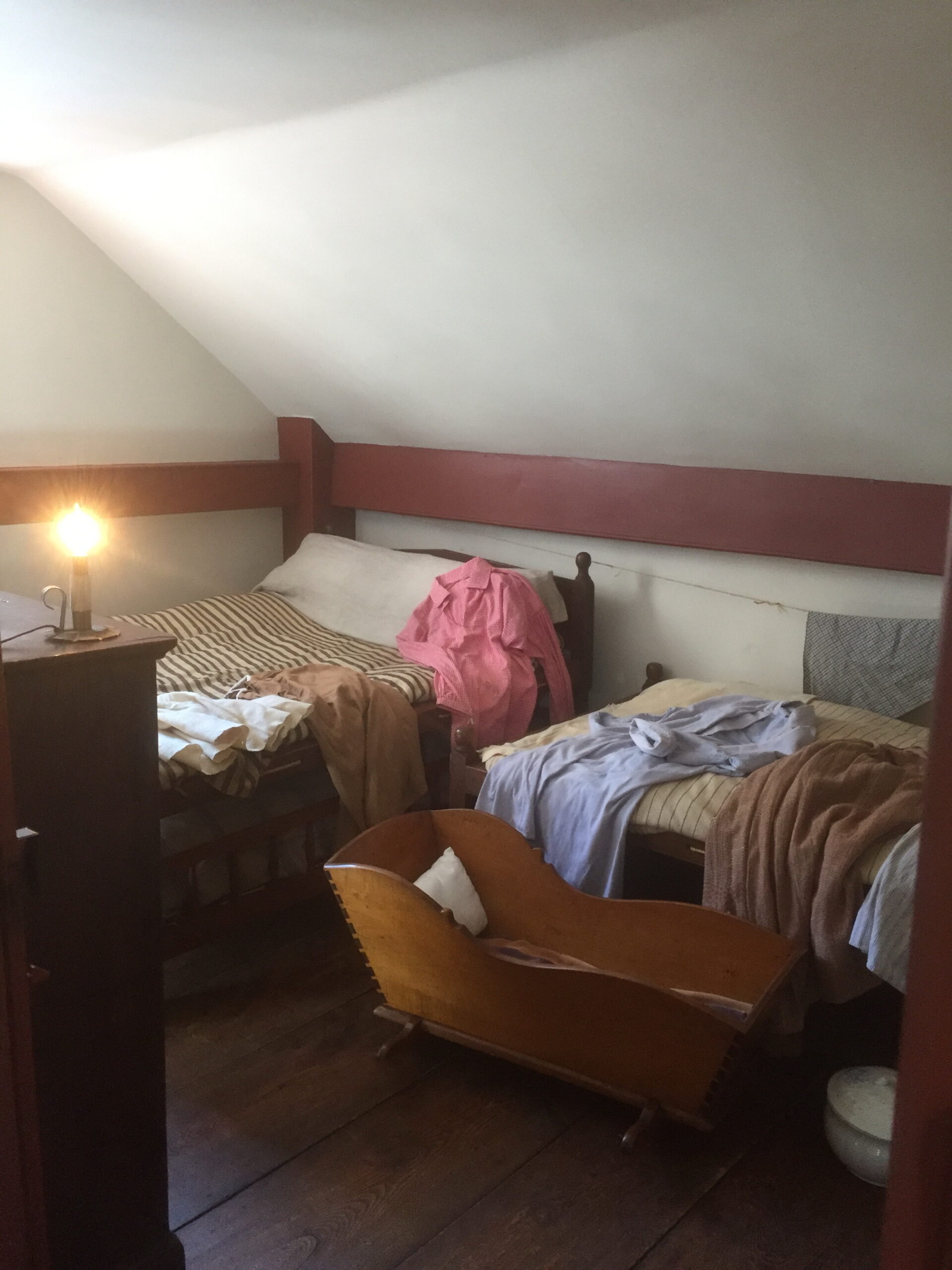
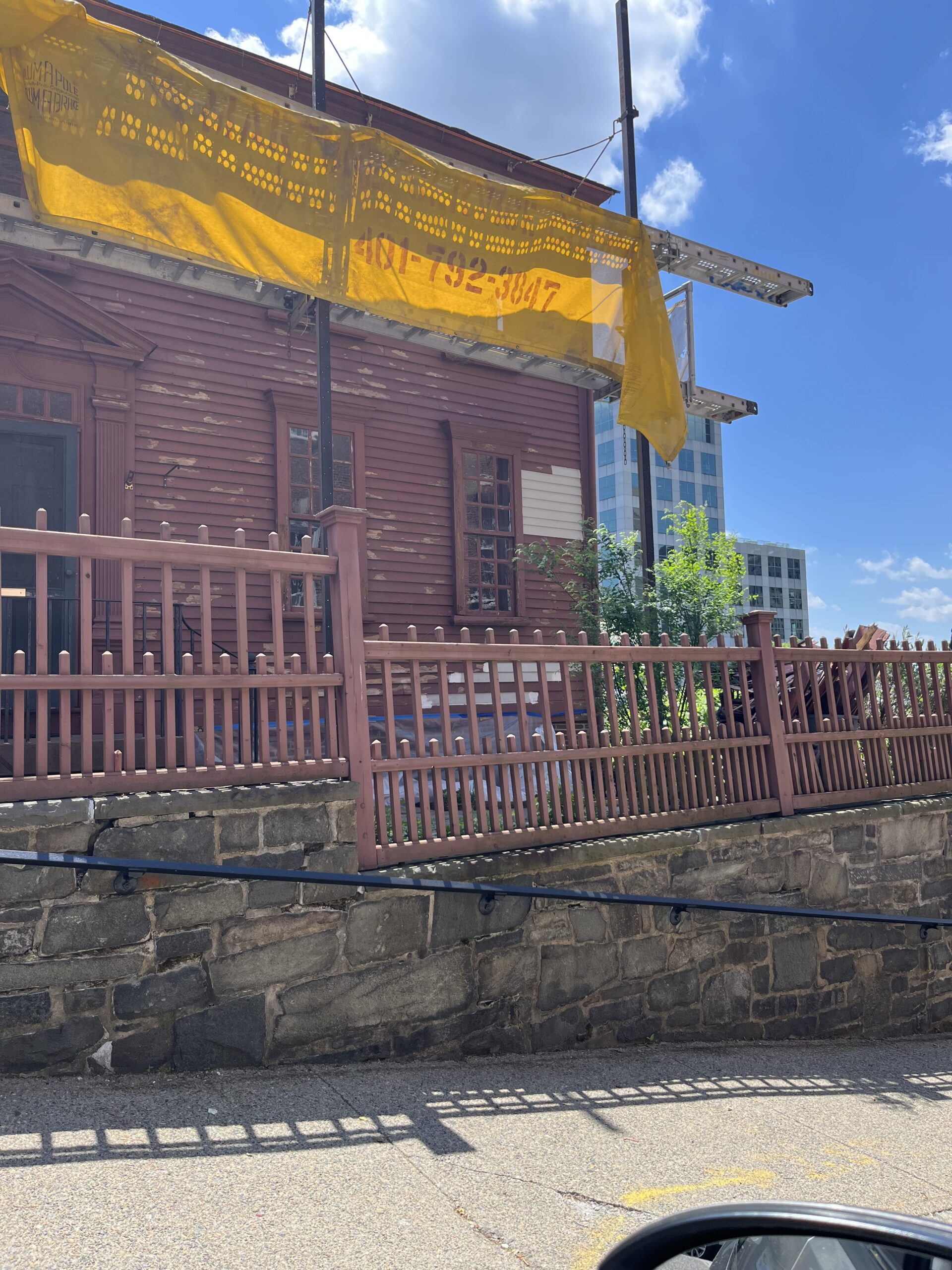
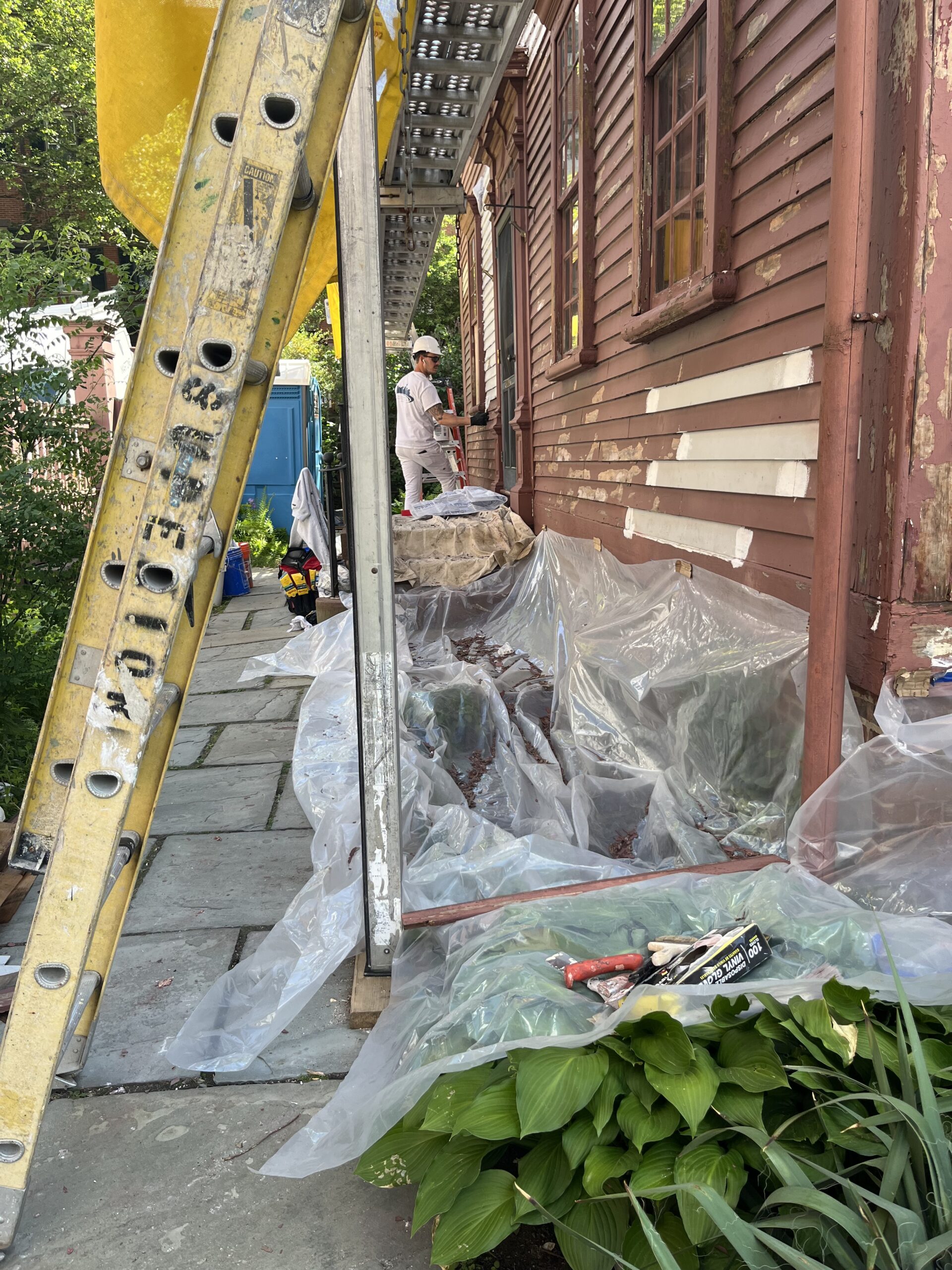
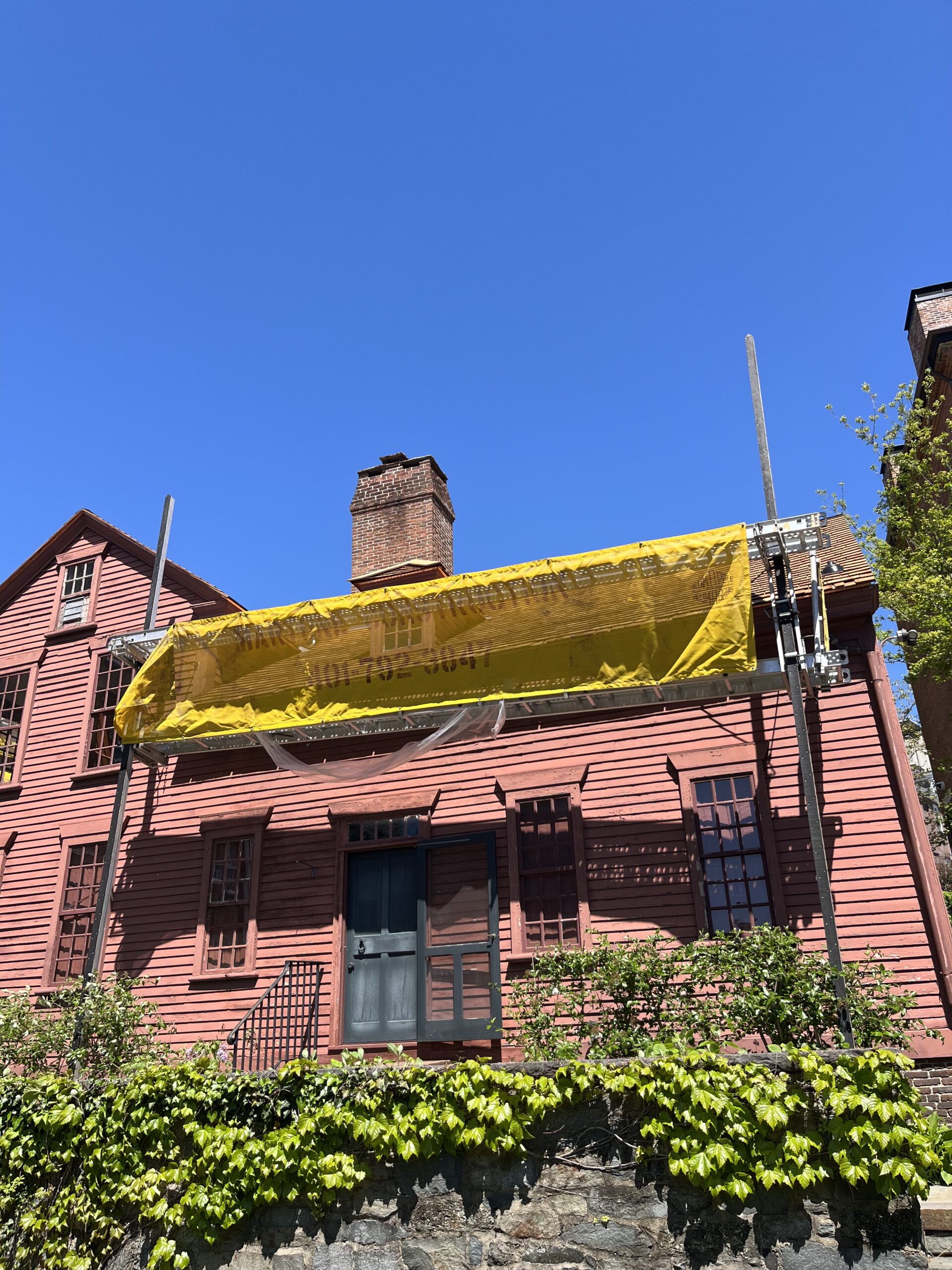
Most of the exterior restoration work is complete! The Stephen Hopkins House is open for touring, mostly on Saturday mornings. Follow the website for added dates of opening. Private tours will be accommodated based on the availability of docents.
We are grateful for the US Department of Interior/National Park Service Semiquincentennial Grant that provided the funds for this project. The scope of the work, mostly complete as of July 4, 2026 was for exterior restoration, including new wood roof shingles, new skylights, localized masonry restoration, wood trim repair, select window sash restoration and sash replacement, repair and/or replacement of wood clapboards, rebuilding of bulkhead, and painting. Additional work to repair and restore the painted wood fencing and gates, and masonry repairs to retaining walls will occur following the completion of the exterior restoration work.
This restoration has been a collaborative effort between the State of Rhode Island DOA/DCAMM, RI Historic Preservation and Heritage Commission, Haynes/deBoer Architecture + Preservation, Martone Inc. and the NSCDA in Rhode Island.
Thank you for your patience!
NSCDA in RI
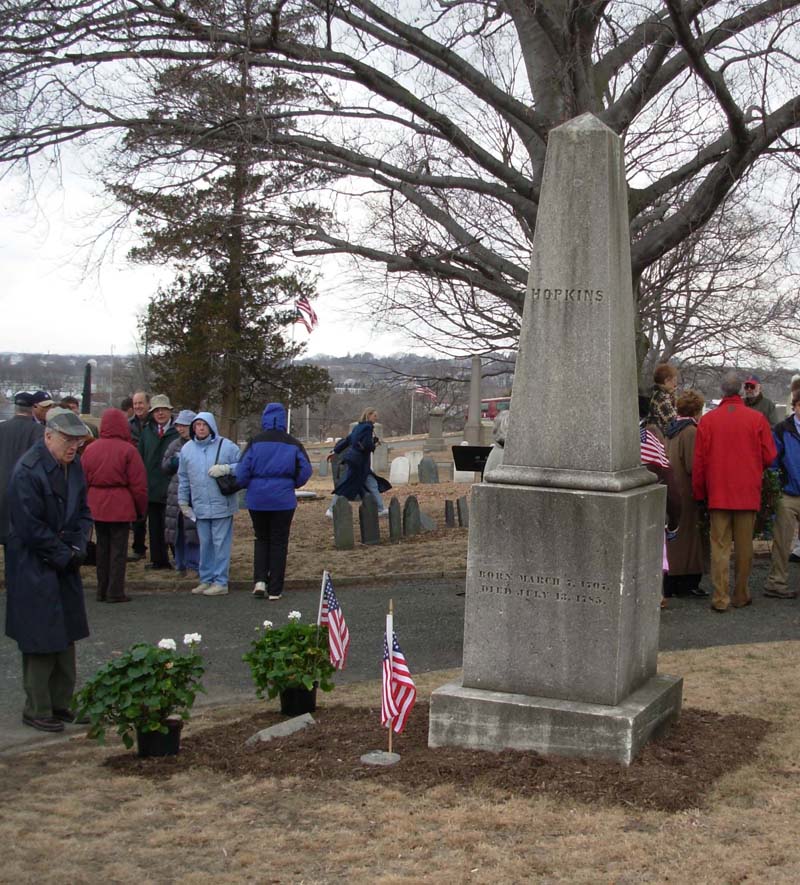
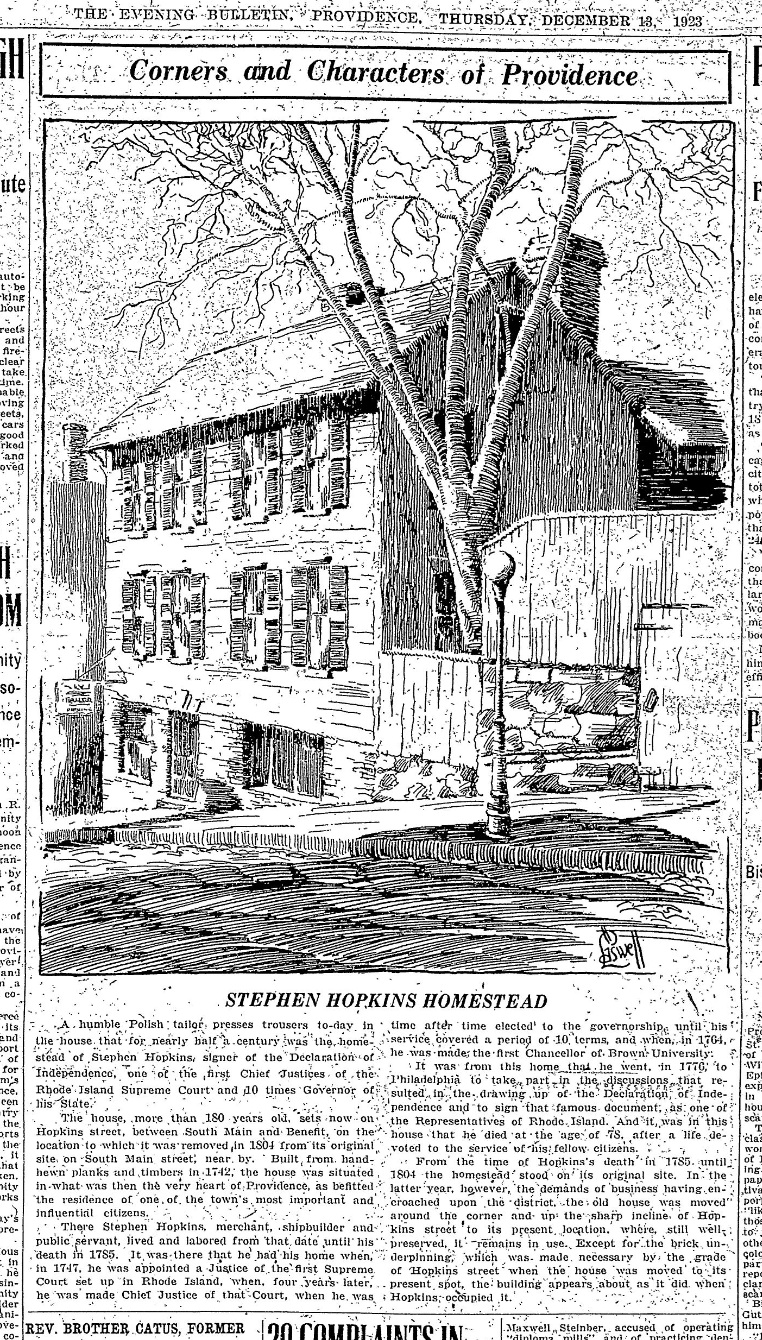
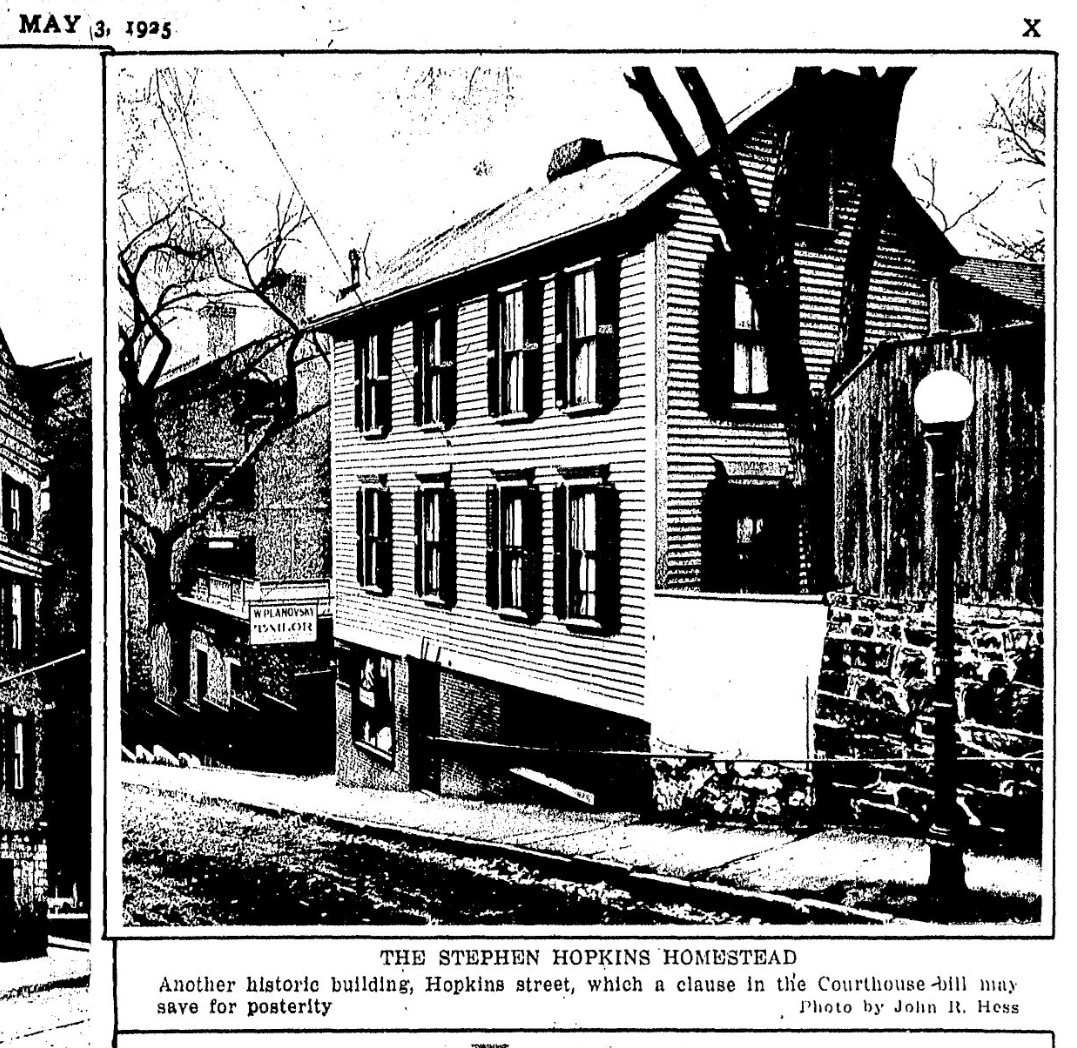
The home of Declaration of Independence signer Stephen Hopkins, his family and their slaves for 4 decades, is located on Benefit Street’s “Mile of History.” Built in 1707 and enlarged in 1743, the building has been moved twice since it was occupied by the Hopkins family. A farmer, a surveyor, a merchant, a shipbuilder, Hopkins served in local government before representing his community in the General Assembly. He moved his family to Providence to become active in the colonial government: presiding as Chief Justice over the Gaspee Affair, elected Governor ten times and represented the colony at the Albany Congress and both Continental Congresses.